We just had our roof replaced and solar installed. Golden Group was so good, I would recommend them all day long. If you need both…
Roof and Solar all in one
Submitted by: Kim&Jeff Manning
Roof and Solar all in one
Submitted by: Kim&Jeff Manning
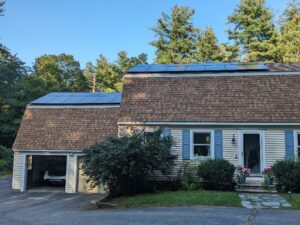
We just had our roof replaced and solar installed. Golden Group was so good, I would recommend them all day long. If you need both done, talk to them about their process. It is thoughtful and thorough. The project management and customer service were top notch. We had ZERO problems.
Over the years, we have gradually decreased the amount of lawn that we mow by allowing the meadow to grow naturally. The meadow now takes…
Meadows and Hugelkultur
Submitted by: Bob & Marisa Steele
Meadows and Hugelkultur
Submitted by: Bob & Marisa Steele
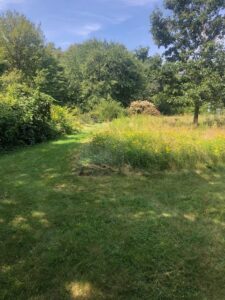
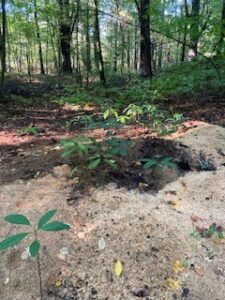
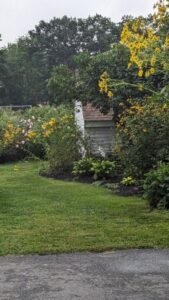
Over the years, we have gradually decreased the amount of lawn that we mow by allowing the meadow to grow naturally. The meadow now takes up about 3/4 of our property. Wildflowers are abundant as are butterflies, dragonflies and birds that have found a home here. We continue to mow an area adjacent to the house along with some paths around the perimeter and through the meadows to the trails & compost bin behind our house. Several years ago, we experimented with hugelkultur, a horticultural technique which creates raised mounds composed of various biomass materials resulting in high density planting that requires little to no irrigation, even in the driest of seasons. This technique, along with using the water retrieved from our dehumidifier and that collected from our rain barrels has allowed us to conserve our water usage in gardening.
We are attempting to rid a corner of our property of Japanese Knotweed. As many know this is an especially nasty invasive. Our goal initially…
An (ongoing) Labor of Love
Submitted by: Connie Woolcock
An (ongoing) Labor of Love
Submitted by: Connie Woolcock
We are attempting to rid a corner of our property of Japanese Knotweed. As many know this is an especially nasty invasive. Our goal initially is to weaken the patch by repeated cutting and removal. This will help prevent seeds from forming, dropping or being spread elsewhere by animals. It also prevents the plant from returning its stored energy back to the rhizome in the fall. We expect many years of having to manage this area of land vigorously during summer. We may never really be 'DONE' with this action but we hope our ongoing efforts are rewarded eventually with native regrowth and continued health of the wetlands surrounding our property.
Getting this energy audit was so easy to do through Mass Save. We scheduled and appointement, they came and took about an hour or so…
Simple starting point
Submitted by: Elizabeth Nees
Simple starting point
Submitted by: Elizabeth Nees
Getting this energy audit was so easy to do through Mass Save. We scheduled and appointement, they came and took about an hour or so to do the assesment and then had several suggestions ready with possible contractors you could use. Very easy!
Started backyard composting a few years ago using mostly food scraps from the kitchen. It's been a great way to cut down on food waste…
Backyard Composting
Submitted by: Annabelle Purcell
Backyard Composting
Submitted by: Annabelle Purcell
Started backyard composting a few years ago using mostly food scraps from the kitchen. It's been a great way to cut down on food waste and has also been beneficial to our garden. Overall its low matinence and I would definitely reccomend starting composting.
We worked with Trinity Solar to have solar panels installed on our roof. They work with subcontractors to complete the installation so that was done…
Rooftop Solar Panels Installed
Submitted by: Dan Fitek
Rooftop Solar Panels Installed
Submitted by: Dan Fitek
We worked with Trinity Solar to have solar panels installed on our roof. They work with subcontractors to complete the installation so that was done by Apex Solar. It's early to say but it seems like we're generating more electricity than we use so we're building up credits.
Several years ago we needed to purchase a hot water heater. At that time we chose to convert to a heat pump and had it…
Hot water heat pump
Submitted by: Courtney Harter
Hot water heat pump
Submitted by: Courtney Harter
Several years ago we needed to purchase a hot water heater. At that time we chose to convert to a heat pump and had it installed by a local contractor. It has been a good choice and works very well.
We tilled our backyard, removed the grass and planted native wildflowers and grasses instead. It is a work in progress but we no longer mow…
Wildflower meadow
Submitted by: Courtney Harter
Wildflower meadow
Submitted by: Courtney Harter
We tilled our backyard, removed the grass and planted native wildflowers and grasses instead. It is a work in progress but we no longer mow and have seen a dramatic increaase in butterflies, birds, and other wildlife!
We've stopped mowing (we still mow once a year) and are in the process of transforming our lawn to a pollinator-friendly meadow with native perennials…
Organic gardens and pollinator meadows
Submitted by: Charlotte Vallaeys
Organic gardens and pollinator meadows
Submitted by: Charlotte Vallaeys
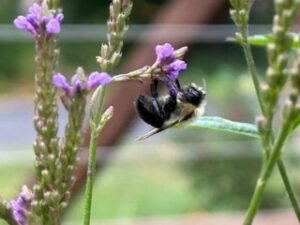
We've stopped mowing (we still mow once a year) and are in the process of transforming our lawn to a pollinator-friendly meadow with native perennials like blue vervain (pictured, a bumblebee favorite!), goldenrods, joe-pye weed, anise hyssop and more.
We have two black compost bins for food scraps. We mix food scraps with leaves that we collect and keep in a third bin, so…
Our composting system
Submitted by: Charlotte Vallaeys
Our composting system
Submitted by: Charlotte Vallaeys
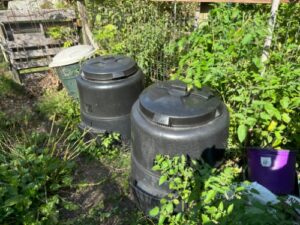
We have two black compost bins for food scraps. We mix food scraps with leaves that we collect and keep in a third bin, so we have a steady supply of carbon-rich brown waste through the winter. We have two bins, which works well for our six-person household. We spread the compost on our veggie garden beds in the spring and fall.
When it came time to replace my electric stove, I thought about a gas model but there's no gas on my street and there was…
I love my induction stove
Submitted by: Barbara Kemp
I love my induction stove
Submitted by: Barbara Kemp
When it came time to replace my electric stove, I thought about a gas model but there's no gas on my street and there was no good place to hide a propane tank. So, after seeing one that a friend had purchased, I settled on an induction model. Before I bought it, I purchased a single induction burner so I could get an idea of how it works. It turned out that most of the cooking pots I had were induction-ready (the rest I donated to Household Goods) and I was delighted to discover how fast it cooks and how responsive it is; it is instantly on or off so there's very little wait time for food to come to temperature or for cooking to end precisely when I want it to. It is also more energy efficient than an electric stove and it certainly doesn't have the emissions that a gas stove does. It's great!
The fourth year living in our new/old(1781) home we discovered that our window mounted airconditioners would not keep up with the hottest summer days. After…
Efficient cooling AND heating
Submitted by: arlene genova
Efficient cooling AND heating
Submitted by: arlene genova
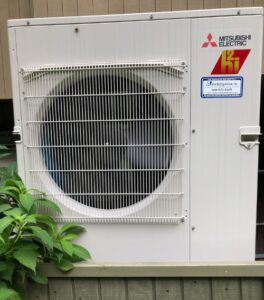
The fourth year living in our new/old(1781) home we discovered that our window mounted airconditioners would not keep up with the hottest summer days. After deciding to "go solar", we then installed efficient Mitsubishi "mini-splits", which not only keep up with the hottest days but also take the chill out of the spring and fall mornings. We get more cooling for far less noise and we no longer need to install/uninstall our prior window warts. (I highly recommend doing both solar and mini-splits. It is very gratifying to know that the sun beating down on a hot day is also doing the work to keep your home cool.)
A year and a half ago we went solar. At the same time, our oil furnace (heat and hot water) went out in our 1781…
Hot water AND dehumidification
Submitted by: arlene genova
Hot water AND dehumidification
Submitted by: arlene genova
A year and a half ago we went solar. At the same time, our oil furnace (heat and hot water) went out in our 1781 home (with dirt floors = humidity). Taking advantage of our new solar energy source we decided to install a heat pump water heater. Not only have we decoupled our hot water from oil consumption, the heat pump water heater is also a dehumidifier, which helps keep our basement dry. Win-win.
I am a founding member of the Harvard Community Solar Garden and I couldn't be happier with the benefit. My 5kw covers my household needs…
The Community Solar Garden makes a difference
Submitted by: Barbara Kemp
The Community Solar Garden makes a difference
Submitted by: Barbara Kemp
I am a founding member of the Harvard Community Solar Garden and I couldn't be happier with the benefit. My 5kw covers my household needs except for a month or two in the winter when there's less sun or deep snow covers the panels. Even then, my annual cost for household electricity is less than $100.
One of the first things we did when we moved to town earlier this year was sign up for Westward Orchards CSA. Our half-share covers…
CSA is the Way!
Submitted by: Teresa Wolf
CSA is the Way!
Submitted by: Teresa Wolf
One of the first things we did when we moved to town earlier this year was sign up for Westward Orchards CSA. Our half-share covers all of the produce we need in a week, and we get a discount on any additional fruits and vegetables grown at the farm! It's important to support our local businesses, and our CSA is one of our investments in the community.
We've been composting since we moved here in 1995. I love cutting down on garbage and enriching our gardens with composted soil.
Gardening gold
Submitted by: Lisa Aciukewicz
Gardening gold
Submitted by: Lisa Aciukewicz
We've been composting since we moved here in 1995. I love cutting down on garbage and enriching our gardens with composted soil.
We switched to Geothermal heating cooling system about 3 years ago as well as a heat pump hot water heater last year. This completed our…
Geothermal heating/cooling system
Submitted by: Suzanne Daines
Geothermal heating/cooling system
Submitted by: Suzanne Daines
We switched to Geothermal heating cooling system about 3 years ago as well as a heat pump hot water heater last year. This completed our transition from propane to electric (with renewable electric energy). The system is fantastic and provides excellent heating and cooling for our home. Now we only use propane during emergencies to fuel our generator. Highly recommend Bill Wenzel and his team for geothermal conversions. We used Rick West to install our heat pump hot water heater. This pulls heat from our muggy hot basement and keeps it nice and cool and dry in our basement all summer.
After a couple decades cutting logs with a hand saw and dragging them to the yard to cut into firewood with a plug-in electric chain…
Electric Lawn Tools: so far, so good
Submitted by: Gary Helmstetter
Electric Lawn Tools: so far, so good
Submitted by: Gary Helmstetter
After a couple decades cutting logs with a hand saw and dragging them to the yard to cut into firewood with a plug-in electric chain saw, I've been very impressed with the convenience, power, and battery life of my Ryobi 40v/4AH chain saw.
I use the same battery for my lawn trimmer, which I think would run for many days on one charge.
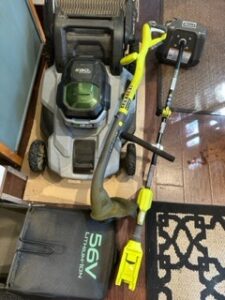
Last week I tried my son-in-law's EGO 56v/5AH lawn mower, and was again impressed with how much work it could do on a single charge.
My current gas-power riding mower is fairly young, and I have nearly two acres to mow, but I'm looking forward to replacing it with a battery powered one in a few years. That wasn't even an option until recently, but a web search produced plenty of them a moment ago.
I also borrowed my son-in-law's EGO leaf blower and like the other tools was positively impressed by it.
I've been doing organic gardening since 2020 with a focus on native plants. This is a good way to protect and encourage our local ecosystem…
Organic, Native Landscaping
Submitted by: Lina Formichelli
Organic, Native Landscaping
Submitted by: Lina Formichelli
I've been doing organic gardening since 2020 with a focus on native plants. This is a good way to protect and encourage our local ecosystem to thrive.
This spring we installed units that provide heat as well as air conditioning; Acton Refrigeration has been a great resource and did a wonderful job…
Splits/Heat Pump installations
Submitted by: Emily Harris
Splits/Heat Pump installations
Submitted by: Emily Harris
This spring we installed units that provide heat as well as air conditioning; Acton Refrigeration has been a great resource and did a wonderful job of installing the unit as well as providing excellent customer service.
Our heat pump was a wonderful addition last fall - for heating, of course (SO nice not to rely on the big tank of oil…
New Heat Pump is Excellent
Submitted by: Kristin Kelley-Muñoz
New Heat Pump is Excellent
Submitted by: Kristin Kelley-Muñoz
Our heat pump was a wonderful addition last fall - for heating, of course (SO nice not to rely on the big tank of oil anymore) - but even better, it was really effective at cooling the house during the hot spell in July. Our house isn't vintage - it was built in the 1970s - so we were able to utilize our existing ducting system, and didn't need to install mini-splits. I was worried we would start closing our windows all the time (I love leaving windows open in the summer) - but no need to worry. When the outside temperature dropped below where we set the pump to turn on (78), we just opened the windows to let the breezes and the sounds of the birds in. Go for it if you're thinking about it, you won't regret it!
Low mow, native plants, no chemicals. I finally downloaded iNaturalist which helps to identify plants to encourage the good volunteers and keep out the invasive…
Eco-friendly Landscaping
Submitted by: Catherine Warner
Eco-friendly Landscaping
Submitted by: Catherine Warner
Low mow, native plants, no chemicals. I finally downloaded iNaturalist which helps to identify plants to encourage the good volunteers and keep out the invasive species. I have at least 5 different goldenrod species and tons of milkweed with monarch caterpillars for the second year in a row!
Switching to an electric car felt like a concrete thing I could do, since I commute to Worcester several days a week. I loved my…
Switching to an electric car
Submitted by: Eric Welsh
Switching to an electric car
Submitted by: Eric Welsh
Switching to an electric car felt like a concrete thing I could do, since I commute to Worcester several days a week. I loved my Mini Cooper, and an electric Mini would have met my commuting needs - but I also wanted something we could use for family trips. I've been delighted with my new Hyundai Ioniq 6! Charging at home is easy, and while I could easily charge at a DC fast charger on a longer trip, so far my range seems to be 300+ miles, so I haven't needed to. We took a weekend trip to the beach in Newport, Rhode Island, and not only was the car comfortable and a pleasure to drive, but we all felt good knowing that we weren't burning any gas to do it. Even better - we were using energy collected from the solar panels on our house and garage!
In 2012, under the Solarize Massachusetts program, we added a 7.7 kW solar array to our south-facing roof. In 2013 we added a 20 kWh…
Solar Array and Battery Backup
Submitted by: George Snyder
Solar Array and Battery Backup
Submitted by: George Snyder
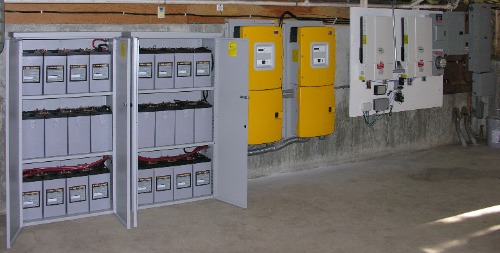
In 2012, under the Solarize Massachusetts program, we added a 7.7 kW solar array to our south-facing roof. In 2013 we added a 20 kWh residential battery backup for power outages. It can support about one day of normal electricity use, or about three days with stringent conservation. If the solar panels are not covered with snow, they can recharge the batteries for even longer outages.
We used New England Clean Energy for both projects. They were very helpful and experienced, and we are happy with the results.
Initially the solar array provided about 85% of our electrical usage. Since we installed EV chargers and GSHP, solar provides only about half of our power. However, our total annual energy cost is now 25% lower than it was in 2011 (adjusted for inflation).
Just over a year ago I had 3 mini splits (air exchange heat pumps) installed in my colonial-style home: I upstairs in the master bedroom…
Year One with My Mini Splits.
Submitted by: Lucy Wallace
Year One with My Mini Splits.
Submitted by: Lucy Wallace
Just over a year ago I had 3 mini splits (air exchange heat pumps) installed in my colonial-style home: I upstairs in the master bedroom and 2 downstairs at opposite ends of the house (family room and my office). The first year has been a learning process for sure, especially given the house has multiple heating zones which enabled me to heat only those areas I was in. That said, I've learned how to balance heating with the mini splits and am looking into adding at least one more in the addition to the house. An added bonus: being able to have air conditioning in my bedroom and office on those very hot/humid nights and days this summer! Great improvement over fans in the windows!!
We opted not to have the backyard composting, but we haven't put food scraps in our trash for over 4 years. We use compostable bags…
Composting with a twist
Submitted by: SusanMary Redinger
Composting with a twist
Submitted by: SusanMary Redinger
We opted not to have the backyard composting, but we haven't put food scraps in our trash for over 4 years. We use compostable bags (for all our trash except for the dreaded Harvard required trash bags for the transfer station) and we put ALL of our food scraps (meat included) into the bag. We then freeze the bags until we are ready to go food shopping at Whole Foods where we put the bags into their compost bin can at the front of the store.
Our lower yard is planted with wildflowers, and has developed into a small meadow. Our backyard garden includes milkweed, mullein, dandelions, clover, and many other…
Meadow development and planting for birds/bees/bats/bugs
Submitted by: Emily Harris
Meadow development and planting for birds/bees/bats/bugs
Submitted by: Emily Harris
Our lower yard is planted with wildflowers, and has developed into a small meadow. Our backyard garden includes milkweed, mullein, dandelions, clover, and many other "weeds" and additional wildflowers that attract bees, butterflies, and hummingbirds. We compost all our food scraps and add that to the garden whenever we plant anything. And oh, yes, we have some lovely plants from the Harvard Conservation yearly giveaway that are thriving, too--redbud, witch hazel, and dogwood, among other things.And the most exciting thing is that for the first time since we've moved to Harvard, we saw bats this summer!!
I bought a 2023 VW ID4 in January so it is still a pretty new experience. That experience has been pretty positive. It handles well…
I love my VW ID4 EV
Submitted by: Robert Benson
I love my VW ID4 EV
Submitted by: Robert Benson
I bought a 2023 VW ID4 in January so it is still a pretty new experience. That experience has been pretty positive. It handles well and the acceleration is impressive. I love not filling up at the gas station and love charging at home - it so convenient! The one somewhat negative aspect is charging away from home where there are not that many chargers. Still I know people who don't have home chargers and use outside chargers for all their charging. It works.
I bought a Chevy Bolt Battery EV in 2017, when they first became available in Massachusetts. It's my favorite car of the six I have…
Chevy Bolt BEV and Honda Clarity PHEV
Submitted by: George Snyder
Chevy Bolt BEV and Honda Clarity PHEV
Submitted by: George Snyder
I bought a Chevy Bolt Battery EV in 2017, when they first became available in Massachusetts. It's my favorite car of the six I have owned over 50 years. It is quiet, zippy, stable, and low-maintenance. Its maximum range is about 260 miles in summer, 200 in winter. All my driving is local, so I recharge in the garage and never need to look for a public charger.
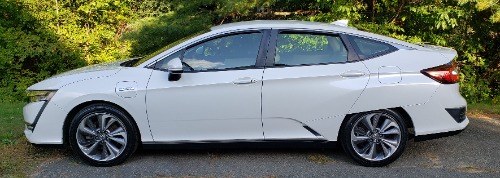
In 2021 my wife needed a "compromise" EV that could run on battery for local trips, but could make an occasional long trip on gas without the delays of finding and using public chargers. We bought her a used Honda Clarity Plug-In Hybrid (PHEV). Her favorite feature is not having to pump gas. The Clarity's battery range is 30-40 miles, so charging in the garage is sufficient for most errands. If the battery runs low during a longer trip, the gas engine kicks in automatically and can provide an additional 250 miles. During the first year we filled up the tank only twice. This summer, on an 1800 mile trip using gas only, we got about 38 MPG.
We just got a new bin to hold our compost which is one of my new favorite things. It has a cover w/ a filter…
New compost bin in our trash drawer
Submitted by: Erin McBee
New compost bin in our trash drawer
Submitted by: Erin McBee
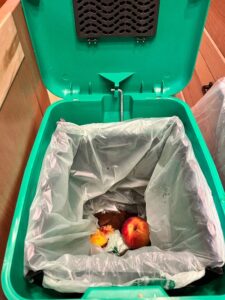
We just got a new bin to hold our compost which is one of my new favorite things. It has a cover w/ a filter and the compostable bag is shut (somewhat) when you shut the top. Now we just need to be sure and keep up with our fruits and veg so we eat them before they compost themselves 🙂
Since we are on a private septic system, the BOH won't allow a garbage disposal. So we just have a small aluminum pail to hold…
We’ve composted our food scraps for 38 years!
Submitted by: Paul Green
We’ve composted our food scraps for 38 years!
Submitted by: Paul Green
Since we are on a private septic system, the BOH won't allow a garbage disposal. So we just have a small aluminum pail to hold our kitchen scraps, and a couple of times a week, one of us carries it to the compost bin. We rinse out the pail, and the process repeats. We use a large, heavy-duty, purpose-built compost bin rather than an open compost pile to frustrate any animals that might be tempted by food scraps. The bin has a trap door down at the bottom, and by the time stuff makes it to the bottom of the bin, it is turned back into soil. Easy, simple, effective. If there is a downside, it would be that you need to take out the garbage even in the winter, and sometimes the lid gets a little frozen. It doesn't take much sun to warm it up and free it, and banging it with a fist also releases the frost. All in all, it just works.
We were thrilled to take the jump back in 2007 and be one of the original investors in the Harvard Community Solar Garden. It was…
Community Solar Garden
Submitted by: SusanMary Redinger
Community Solar Garden
Submitted by: SusanMary Redinger
We were thrilled to take the jump back in 2007 and be one of the original investors in the Harvard Community Solar Garden. It was a great opportunity for us since our house was deemed too shady to qualify for other programs. We enjoyed the initial years of rebate checks and now love the monthly credits against our electricy bill.
I've loved our electric lawnmower and weedwacker for several years and highly recommend. Last year I was gifted an electric pole saw to help manage our…
Mowers, weedwackers, and chainsaws
Submitted by: Adam Meier
Mowers, weedwackers, and chainsaws
Submitted by: Adam Meier
I've loved our electric lawnmower and weedwacker for several years and highly recommend.
Last year I was gifted an electric pole saw to help manage our heavily tree-covered property and the ongoing need to steward the branch entanglement. Soon after I had the opportunity to use a full-sized electric chainsaw, a Husquvarna, and loved it. So much cleaner than a gas-powered, but the model was corded and I often need to access more remote spaces. Fortunately, Husquvarna's current electric chainsaw models are all cordless, battery powered. They're pricier than gas-powered models, but I bit-the-bullet and ordered one. It was a long wait-time and I hope the company's commitment to high-volume production, transition from gas-powered, improves. But the battery-powered chainsaw arrived earlier this summer and it's great so far. Easy to operate and maintain, equally powerful - if not moreso given the immediate full torque available with electric motors - and as portable as I need. The battery life has been sufficient for my needs to-date and the cadence of my approach on projects, but I think having 2 batteries would make longer project chunks easier.
Advocacy on climate can occur at so many levels: global, federal, state, town, friends, and family. Over the years I've had the opportunity to engage…
From Keystone XL Pipeline to Inflation Reduction Act to road cleanups
Submitted by: Adam Meier
From Keystone XL Pipeline to Inflation Reduction Act to road cleanups
Submitted by: Adam Meier
Advocacy on climate can occur at so many levels: global, federal, state, town, friends, and family. Over the years I've had the opportunity to engage in each and then some... advocating for academic programs to incorporate climate into public health curriculums, build courses on scope 3 emissions, and more. The first intentional climate advocacy I participated in was as part of Power Shift in DC in 2009. It was the first ever national youth conference to solve the climate crisis and we marched from the conference center to the coal power plant powering the halls of Congress, engaging in civil disobedience to convey the importance of leaders taking action on climate. That's one way to get started... dive on in. When the US's Inflation Reduction Act passed in 2022, I reflected the ten-thousand peers who joined that conference and the tens and hundrers of millions of people who have been fighting for decades to see that mitigation and adaptation strategies are implemented and implemented equitably. Advocacy pays off, even if the results aren't linear.
My husband has a whole network going using Home Assistant - he has connected plugs for various outlets, mainly appliances as well as Kasa light…
reduced wasted electricity with Home Assistant & Kasa switches
Submitted by: Erin McBee
reduced wasted electricity with Home Assistant & Kasa switches
Submitted by: Erin McBee
My husband has a whole network going using Home Assistant - he has connected plugs for various outlets, mainly appliances as well as Kasa light switches. He can monitor usage and turn off lights left on. We were surprised at how much energy our TV uses.
We had our plumber install an AO Smith Heat Pump Water Heater (HPWH) almost 4 years ago. I liked the idea that it would use…
Living with a Heat Pump Water Heater
Submitted by: Paul Green
Living with a Heat Pump Water Heater
Submitted by: Paul Green
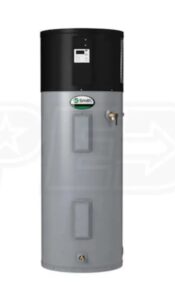
We had our plumber install an AO Smith Heat Pump Water Heater (HPWH) almost 4 years ago. I liked the idea that it would use less electricity than a electric resistance hot water heater. It's quiet even when operating (a soft fan noise is all). Our model has a 66 gallon tank, which has proven to be plenty for 2 people. The room in which it is installed must be of a certain minimum size, depending on the model you select. Our basement was large enough for the model we selected. It does make the basement a little colder than it would otherwise be. But since we don't have any finished areas in the basement, and we aren't down there very often, this has not been an issue. A byproduct of a heat pump is that it dehumidifies the air, which because we have a forced hot air system, turns out to dehumidify the entire house, at least somewhat. I say somewhat, because with only 2 people in the house, and with the water heater downstream of our solar hot water system, it rarely runs in the warmer months. The fact it is dehuimidifying the air is more noticeable in the winter months. So we run a humidifier in our bedroom. We've had just one maintenance call since it was installed, to replace a corroded junction pipe that attached the water heater to the rest of the plumbing. Not a big deal. No regrets; I'll buy another HPWH when the time comes to replace it.
I own a 2021 Volvo XC40 battery electric vehicle, similar to the 2023 model pictured above. I've owned 4 gas-powered Volvos since 1996 and in…
Living with an EV
Submitted by: Paul Green
Living with an EV
Submitted by: Paul Green
I own a 2021 Volvo XC40 battery electric vehicle, similar to the 2023 model pictured above. I've owned 4 gas-powered Volvos since 1996 and in my opinion, this is by far the best Volvo I've owned. I do almost all my charging at home, almost always overnight. I charge it about every 4-5 days, or about every 100-120 miles. The cost of electricity is a lot less than the cost of gasoline (maybe half), and it doesn't fluctuate, unlike the cost of gas. I bought a ChargePoint home charger and paid an electrician to install it. I didn't realize it at the time, but all I really needed was to add a 220 volt outlet with the appropriate recepticle. The car can do the rest. In fact, for the first few months, I charged it on 110 volt power; it just takes a lot longer. The acceleration is superb. I really like the "one pedal" driving, whereby the accelerator pedal engages moderate braking when you let it up. I find that for city driving, I never need to switch to the regular brake pedal.
We regularly drive up to central NH; this is a 125 mile trip. I usually charge to 90% before starting out, and we use 50% to 60% of the battery by the time we get there (depends on the season).
I don't have any range anxiety. The car's infotainment system calculates how much battery power will be left at your destination, and it knows where charging stations are on the way. It also nags the driver a lot when the battery gets below 25%. I've never had any issues here. I don't want to drive hundreds of miles in a single day, anyway. If I see a storm coming up, I recharge the battery early.
We started composting plant waste from cooking a few months ago. We were/are amazed at the decrease in the number of transfer station bags we…
Saving on transfewr station garbage bags
Saving on transfewr station garbage bags
We started composting plant waste from cooking a few months ago. We were/are amazed at the decrease in the number of transfer station bags we now use. We use approximately half the number we use to - so we are saving on the bags.
We replaced our aging oil furnace with a geothermal heat pump system last summer, and it's kept our 18th century house perfectly comfortable through extraordinarily…
Switching to Geothermal Heat Pumps
Submitted by: Eric Welsh
Switching to Geothermal Heat Pumps
Submitted by: Eric Welsh
We replaced our aging oil furnace with a geothermal heat pump system last summer, and it's kept our 18th century house perfectly comfortable through extraordinarily cold and hot days these last twelve months (even during the -14F, -46F windchill weekend this past February). The system is extremely quiet and requires little maintenance other than changing air filters every few months.
When we started composting, we hadn't done much if any prior research. We didn't measure green or brown matter. Instead, we piled kitchen scraps, grass…
Compost Pile
Submitted by: Katie Boutelle
Compost Pile
Submitted by: Katie Boutelle
When we started composting, we hadn't done much if any prior research. We didn't measure green or brown matter. Instead, we piled kitchen scraps, grass clippings, fall leaves, and our chickens used bedding. Surprisingly, this worked well and we had no problems with stench. In addition, our chickens loved scratching for bugs and the like. I would highly recommend this!
We manage our land for multiple objectives, mainly environmental impact/ecological quality, our aesthetic enjoyment and nature education, and the minor production of firewood and food…
Holistic Forest Management
Submitted by: Andrew Wilcox
Holistic Forest Management
Submitted by: Andrew Wilcox
We manage our land for multiple objectives, mainly environmental impact/ecological quality, our aesthetic enjoyment and nature education, and the minor production of firewood and food for our own usage. We divided our property into “zones” where the terrain, soils, water features and previous land use make a distinct plant community with distinct management needs to achieve our objectives. We made a plant inventory and documented over 200 species across the zones. We manage very lightly, removing invasives, favoring natives that are present, and seeding/transplanting a selected number of native plants. We enjoy the process and believe that it generates some modest positive impacts on the climate, biodiversity and society through carbon storage, habitat creation and water protection.
I’m not sure what group spearheaded this effort but I know Jen Sundeen was actively involved in providing backyard compost barrels at a reduced price.…
Build your own great garden soil!
Submitted by: KARA MCGUIRE MINAR
Build your own great garden soil!
Submitted by: KARA MCGUIRE MINAR
I’m not sure what group spearheaded this effort but I know Jen Sundeen was actively involved in providing backyard compost barrels at a reduced price. It’s great to recycle & turn food scraps into great garden soil.
When we purchase lawn care and gardening equipment, it's always electric! We recently switched from a gas-powered cultivator for the garden to an electric one.
All Ryobi
Submitted by: Charlotte Vallaeys
All Ryobi
Submitted by: Charlotte Vallaeys
When we purchase lawn care and gardening equipment, it's always electric! We recently switched from a gas-powered cultivator for the garden to an electric one.
Our accessory apartment has more insulation than required per mass save, hvac is heat pump, stove is induction and window blinds add additional insulation effect.…
Our heating and cooling efforts
Submitted by: Margaret Murphy
Our heating and cooling efforts
Submitted by: Margaret Murphy
Our accessory apartment has more insulation than required per mass save, hvac is heat pump, stove is induction and window blinds add additional insulation effect. Roof has maximum number of solar panels and all appliances are energy efficient
I have been very inspired by Doug Tallamy's writings and talks, and I decided to augment my gardens, which already have many native plants, with…
The oak tree bed
Submitted by: Jessie Panek
The oak tree bed
Submitted by: Jessie Panek
I have been very inspired by Doug Tallamy's writings and talks, and I decided to augment my gardens, which already have many native plants, with a new bed surrounding a large oak tree. This new bed is filled with all native plants, and covers almost all the area under the oak's canopy, most of which was lawn. The idea is to provide a hospitable place for butterfly/moth larvae after they finish feeding in the oak and drop down to the ground to continue their life cycle. These larvae are particularly important for breeding birds, which feed their young a diet of almost all caterpillars. It has been exciting to watch this bed develop. One of the plant species -- Heliopsis helianthoides, false sunflower-- was attacked this spring by thousands of red aphids. I squished them and dislodged them with sprays of water, but they kept coming. I waited hopefully for the calvary to arrive... and I was finally rewarded with the good bugs who ate all the aphids. It was hard being patient, but so satisfying to see nature solve the problem!
In Harvard, backyard composting is easy. We've been doing it for a few years and love the end product, it really helps the garden! We…
Compost Happens
Submitted by: Stuart Sklar
Compost Happens
Submitted by: Stuart Sklar
In Harvard, backyard composting is easy. We've been doing it for a few years and love the end product, it really helps the garden! We also love keeping organics out of the solid waste stream.
Over the last decade we have replaced every original window, door, and skylight in our 1978 Cape Style home with new Energy Star rated replacements.…
Full house door, window, and skylight replacement.
Submitted by: Stacia Donahue
Full house door, window, and skylight replacement.
Submitted by: Stacia Donahue
Over the last decade we have replaced every original window, door, and skylight in our 1978 Cape Style home with new Energy Star rated replacements. We had to do the work in phases due to cost, but we have completed the last replacements with the exterior doors this spring. The differenece in air-tightness is very noticiable. In the summer, the cool stays in longer even though we do not have whole house air conditioning. In the winter, the snow does not instantly melt off the skylights like it did with the old, original skylights. The added bonus is that the new windows and doors look great!
We were part of the Solarize Harvard project which was done several years ago. We were pleased to add solar to provide green electricity to…
Added Rooftop Solar
Submitted by: KARA MCGUIRE MINAR
Added Rooftop Solar
Submitted by: KARA MCGUIRE MINAR
We were part of the Solarize Harvard project which was done several years ago. We were pleased to add solar to provide green electricity to our antique house.
We bought a TESLA battery thinking that it would be a good, quiet, backup to have during power outages. It has been. The only way…
TESLA Battery saves the day
Submitted by: Guy Hermann
TESLA Battery saves the day
Submitted by: Guy Hermann
We bought a TESLA battery thinking that it would be a good, quiet, backup to have during power outages. It has been. The only way we know there has been an outage is the sound of a neighbor's generator starting. While the battery doesn't have the long-running capacity of a generator installation, we managed to nurse it through a three day outage without unplugging the fridge. That is worth the cost alone. What we didn't realize was that National Grid's Connected Solutions program would pay us to use our battery to help power the grid on hot summer days. We thought this would be mostly an environmentally altruistic gesture, so the first annual check for $800 was a very pleasant surprise!
Not driving a Tesla...but just trying to step-by-step make choices to address these issues. As stuff needs to be replaced, we are trying to switch…
Electric (Lawn) Slide
Submitted by: Andrea O'Rourke-Friel
Electric (Lawn) Slide
Submitted by: Andrea O'Rourke-Friel
Not driving a Tesla...but just trying to step-by-step make choices to address these issues. As stuff needs to be replaced, we are trying to switch to battery-operated equipment. So far, the snowblower, handheld lawnmower for the front, and the weedwhacker are all electric!