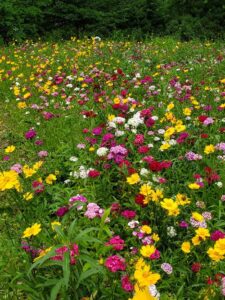
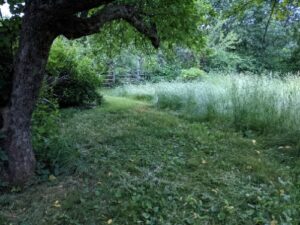
Over the years, we have gradually decreased the amount of lawn that we mow by allowing the meadow to grow naturally. The meadow now takes…
Meadows and Hugelkultur
Submitted by: Bob & Marisa Steele
Meadows and Hugelkultur
Submitted by: Bob & Marisa Steele
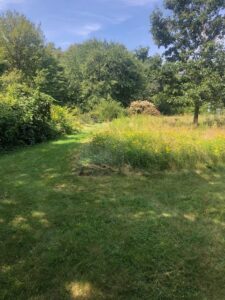
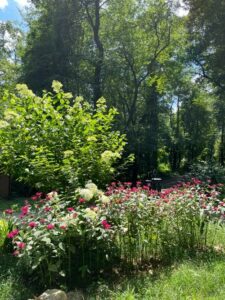
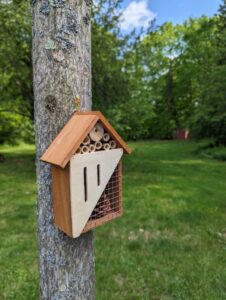
Over the years, we have gradually decreased the amount of lawn that we mow by allowing the meadow to grow naturally. The meadow now takes up about 3/4 of our property. Wildflowers are abundant as are butterflies, dragonflies and birds that have found a home here. We continue to mow an area adjacent to the house along with some paths around the perimeter and through the meadows to the trails & compost bin behind our house. Several years ago, we experimented with hugelkultur, a horticultural technique which creates raised mounds composed of various biomass materials resulting in high density planting that requires little to no irrigation, even in the driest of seasons. This technique, along with using the water retrieved from our dehumidifier and that collected from our rain barrels has allowed us to conserve our water usage in gardening.
We are attempting to rid a corner of our property of Japanese Knotweed. As many know this is an especially nasty invasive. Our goal initially…
An (ongoing) Labor of Love
Submitted by: Connie Woolcock
An (ongoing) Labor of Love
Submitted by: Connie Woolcock
We are attempting to rid a corner of our property of Japanese Knotweed. As many know this is an especially nasty invasive. Our goal initially is to weaken the patch by repeated cutting and removal. This will help prevent seeds from forming, dropping or being spread elsewhere by animals. It also prevents the plant from returning its stored energy back to the rhizome in the fall. We expect many years of having to manage this area of land vigorously during summer. We may never really be 'DONE' with this action but we hope our ongoing efforts are rewarded eventually with native regrowth and continued health of the wetlands surrounding our property.
We tilled our backyard, removed the grass and planted native wildflowers and grasses instead. It is a work in progress but we no longer mow…
Wildflower meadow
Submitted by: Courtney Harter
Wildflower meadow
Submitted by: Courtney Harter
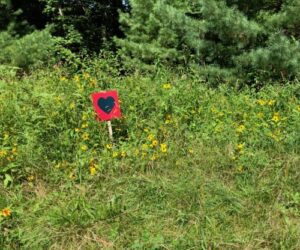
We tilled our backyard, removed the grass and planted native wildflowers and grasses instead. It is a work in progress but we no longer mow and have seen a dramatic increaase in butterflies, birds, and other wildlife!
We've stopped mowing (we still mow once a year) and are in the process of transforming our lawn to a pollinator-friendly meadow with native perennials…
Organic gardens and pollinator meadows
Submitted by: Charlotte Vallaeys
Organic gardens and pollinator meadows
Submitted by: Charlotte Vallaeys
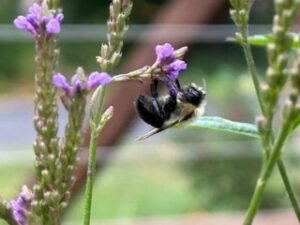
We've stopped mowing (we still mow once a year) and are in the process of transforming our lawn to a pollinator-friendly meadow with native perennials like blue vervain (pictured, a bumblebee favorite!), goldenrods, joe-pye weed, anise hyssop and more.
I've been doing organic gardening since 2020 with a focus on native plants. This is a good way to protect and encourage our local ecosystem…
Organic, Native Landscaping
Submitted by: Lina Formichelli
Organic, Native Landscaping
Submitted by: Lina Formichelli
I've been doing organic gardening since 2020 with a focus on native plants. This is a good way to protect and encourage our local ecosystem to thrive.
Low mow, native plants, no chemicals. I finally downloaded iNaturalist which helps to identify plants to encourage the good volunteers and keep out the invasive…
Eco-friendly Landscaping
Submitted by: Catherine Warner
Eco-friendly Landscaping
Submitted by: Catherine Warner
Low mow, native plants, no chemicals. I finally downloaded iNaturalist which helps to identify plants to encourage the good volunteers and keep out the invasive species. I have at least 5 different goldenrod species and tons of milkweed with monarch caterpillars for the second year in a row!
Our lower yard is planted with wildflowers, and has developed into a small meadow. Our backyard garden includes milkweed, mullein, dandelions, clover, and many other…
Meadow development and planting for birds/bees/bats/bugs
Submitted by: Emily Harris
Meadow development and planting for birds/bees/bats/bugs
Submitted by: Emily Harris
Our lower yard is planted with wildflowers, and has developed into a small meadow. Our backyard garden includes milkweed, mullein, dandelions, clover, and many other "weeds" and additional wildflowers that attract bees, butterflies, and hummingbirds. We compost all our food scraps and add that to the garden whenever we plant anything. And oh, yes, we have some lovely plants from the Harvard Conservation yearly giveaway that are thriving, too--redbud, witch hazel, and dogwood, among other things.And the most exciting thing is that for the first time since we've moved to Harvard, we saw bats this summer!!
We manage our land for multiple objectives, mainly environmental impact/ecological quality, our aesthetic enjoyment and nature education, and the minor production of firewood and food…
Holistic Forest Management
Submitted by: Andrew Wilcox
Holistic Forest Management
Submitted by: Andrew Wilcox
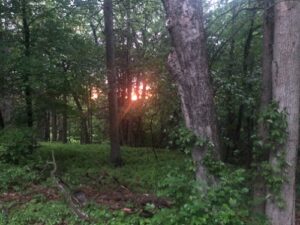
We manage our land for multiple objectives, mainly environmental impact/ecological quality, our aesthetic enjoyment and nature education, and the minor production of firewood and food for our own usage. We divided our property into “zones” where the terrain, soils, water features and previous land use make a distinct plant community with distinct management needs to achieve our objectives. We made a plant inventory and documented over 200 species across the zones. We manage very lightly, removing invasives, favoring natives that are present, and seeding/transplanting a selected number of native plants. We enjoy the process and believe that it generates some modest positive impacts on the climate, biodiversity and society through carbon storage, habitat creation and water protection.
I have been very inspired by Doug Tallamy's writings and talks, and I decided to augment my gardens, which already have many native plants, with…
The oak tree bed
Submitted by: Jessie Panek
The oak tree bed
Submitted by: Jessie Panek
I have been very inspired by Doug Tallamy's writings and talks, and I decided to augment my gardens, which already have many native plants, with a new bed surrounding a large oak tree. This new bed is filled with all native plants, and covers almost all the area under the oak's canopy, most of which was lawn. The idea is to provide a hospitable place for butterfly/moth larvae after they finish feeding in the oak and drop down to the ground to continue their life cycle. These larvae are particularly important for breeding birds, which feed their young a diet of almost all caterpillars. It has been exciting to watch this bed develop. One of the plant species -- Heliopsis helianthoides, false sunflower-- was attacked this spring by thousands of red aphids. I squished them and dislodged them with sprays of water, but they kept coming. I waited hopefully for the calvary to arrive... and I was finally rewarded with the good bugs who ate all the aphids. It was hard being patient, but so satisfying to see nature solve the problem!
A few years ago, we planted two wildflower meadows, one atop of our septic mound. They have each taken on individual characters due to differing…
Colorful septic mound
Submitted by: Charles Zucker
Colorful septic mound
Submitted by: Charles Zucker
A few years ago, we planted two wildflower meadows, one atop of our septic mound. They have each taken on individual characters due to differing soil and exposure conditions, and both have been covered with a succession of blooms from early spring till hard frost. The pollinators, other beneficial insects, and birds have had a field day! They have also reduced the less than beneficial insect pressure on our organic vegetable and herb gardens!
With the Advent of No Mow May, I've been re-thinking my landscaping choices. Why am I mowing my whole yard anyway? When I was a…
Re-Thinking the Yard
Submitted by: Kit Holland
Re-Thinking the Yard
Submitted by: Kit Holland
With the Advent of No Mow May, I've been re-thinking my landscaping choices. Why am I mowing my whole yard anyway? When I was a kid, I remember we only mowed right around the house. Over the years that somehow turned into mowing an acre of grass! It suddenly struck me how absurd and unnecessary that was. So I've let my back yard return to meadow. I do mow it once a year in the late fall, otherwise I let it grow. What a treat it has been--so beautiful to look at. Also letting my front garden host any milkweed that sprouts; I have quite a crop this year! It goes perfectly with the catmint and bee balm. Go, pollinators!
Our farm has been certifed organic with Baystate Organic Certifiers since 2006. We're one of the few organic orchards in the state. We also go…
Certified Organic
Submitted by: Linda Hoffman
Certified Organic
Submitted by: Linda Hoffman
Our farm has been certifed organic with Baystate Organic Certifiers since 2006. We're one of the few organic orchards in the state. We also go beyond organic standards to grow nutrient dense food and promote habitat for native pollinators.
I've added driplines to many of the plantings in my yard (flowers, herb beds, raspberries and blueberries). The driplines allow me to target water to…
Drip lines
Submitted by: Libby Levison
Drip lines
Submitted by: Libby Levison
I've added driplines to many of the plantings in my yard (flowers, herb beds, raspberries and blueberries). The driplines allow me to target water to the plant roots. I also mulch so that less water evaporates.
Our family planted a pollinator garden. We have seen many bees and butterflys and it has been nice to see them.
Eco Landscaping
Submitted by: Jan Daley
Eco Landscaping
Submitted by: Jan Daley
Our family planted a pollinator garden. We have seen many bees and butterflys and it has been nice to see them.
When we moved into our home, we let the garden grow out in order to see what actually was growing each season. We were lucky…
Planting to Support Bees
Submitted by: Teresa Wolf
Planting to Support Bees
Submitted by: Teresa Wolf
When we moved into our home, we let the garden grow out in order to see what actually was growing each season. We were lucky to find many varieties of lilies, roses, blueberries, apples, and even a pear tree! We then added in additional plants to help support our local pollinators. We planted peonies, bee balm, a couple varieties of butterfly bushes, and daisies.
We also added a few pollinator boxes to the garden to help give shelter to bees and butterflies passing through!
In an effort to go green we have installed heat pumps and solar panels; bought an electric car; and grew a pollinator garden in our…
Heat pumps, pollinator gardens and electric car
Submitted by: Judith Ockene
Heat pumps, pollinator gardens and electric car
Submitted by: Judith Ockene
In an effort to go green we have installed heat pumps and solar panels; bought an electric car; and grew a pollinator garden in our back meadow. We also have a gas stove top. We are pleased with all these changes. Ira especially likes his green
mini Cooper and we are surprised we see so few electric cars in town. The pollinator garden is beautiful thanks to our daughter Lauren. Going green is important. We have started but we still have a long way to go. We are happy to speak to anyone who has questions for us. Just stop by.
Judy and Ira Ockene, Fairbank St
I have added drip irrigation to my raspberries, blueberries and flower gardens, including the wildflower patch. The drip lines mean water is applied to the…
Drip irrigation
Submitted by: Libby Levison
Drip irrigation
Submitted by: Libby Levison
I have added drip irrigation to my raspberries, blueberries and flower gardens, including the wildflower patch. The drip lines mean water is applied to the ground. Less water is wasted than using a sprinkler and less evaporates.
We let our grass grow and over the years, mowed bi-annually to prevent the establishment of trees, removed invasive plants, and introduced native seeds and…
meadow landscaping
Submitted by: Teresa Garti
meadow landscaping
Submitted by: Teresa Garti
We let our grass grow and over the years, mowed bi-annually to prevent the establishment of trees, removed invasive plants, and introduced native seeds and plants. The meadow is thriving and the mowed paths are far more interesting than "lawn". We maintain a small lawn area for meadow viewing.